
Klarna x Milkywire
Climate change is one of the great challenges of this century. Klarna acknowledges that its business has an impact on the climate and is committed to supporting solutions that help address the climate crisis, both within its own value chain and beyond. At the heart of Klarna’s climate change mitigation strategy are: a) an ambitious target to reach net zero emissions across its value chain by 2040, independently validated by the Science Based Targets initiative, and b) a commitment to take responsibility for those emissions it has not yet reduced by pricing them with an internal carbon fee and using the funds to support the solutions needed to reach global net zero. Klarna is a founding partner of the Climate Transformation Fund, the ‘beyond-offsetting’ charitable fund curated by Milkywire that selects and supports a wide range of projects addressing the climate crisis within the durable carbon removal, nature restoration & protection, and decarbonization sectors. By supporting solutions through the CTF, Klarna’s focus is to fund solutions that deliver catalytic impact and forge a pathway to meet our global climate goals.

Fund total: $18.7M
Klarna has contributed $8.4M since 2021.
Klarna has supported a total of 47 projects in 26 countries.
While Klarna is on its journey to reduce emissions to net zero by 2040, there will be GHG emissions that are yet to be reduced. Klarna is taking responsibility for these emissions and applies a voluntary internal carbon fee to all its annual greenhouse gas (GHG) emissions. The tax rates are differentiated based on the source of emissions to reflect the varying levels of control Klarna has over each emission category and the shared responsibility for Scope 3 emissions across the value chain: - USD 200 per ton of CO₂e for Scope 1 and Scope 2 emissions. - USD 100 per ton of CO₂e for Scope 3 emissions related to business travel (Category 3.6). - USD 10 per ton of CO₂e for all other Scope 3 emissions.
Klarna uses the funds generated through its internal carbon fee to finance Beyond Value Chain Mitigation (BVCM) via the Climate Transformation Fund (CTF). In this model, rather than focusing on “offsetting” its own emissions, Klarna uses the funds to finance a portfolio of climate projects focused on maximizing overall climate impact. As suggested by many experts, this approach is a much-needed evolution of the way companies have traditionally financed climate action and Klarna is amongst the first large businesses pioneering it worldwide.

Milkywire's Climate Transformation Fund, established in 2021, focuses on innovative projects that accelerate progress toward net-zero targets and align with ambitious sustainability leadership goals. Our mission is to achieve maximum long-term CO₂ reduction or removal per dollar spent. We're committed to supporting new technical solutions, influencing climate policy for greater ambition, and scaling up nature-based projects. With 49 projects already backed and 15+ partners on board, we're paving the way for a sustainable future.
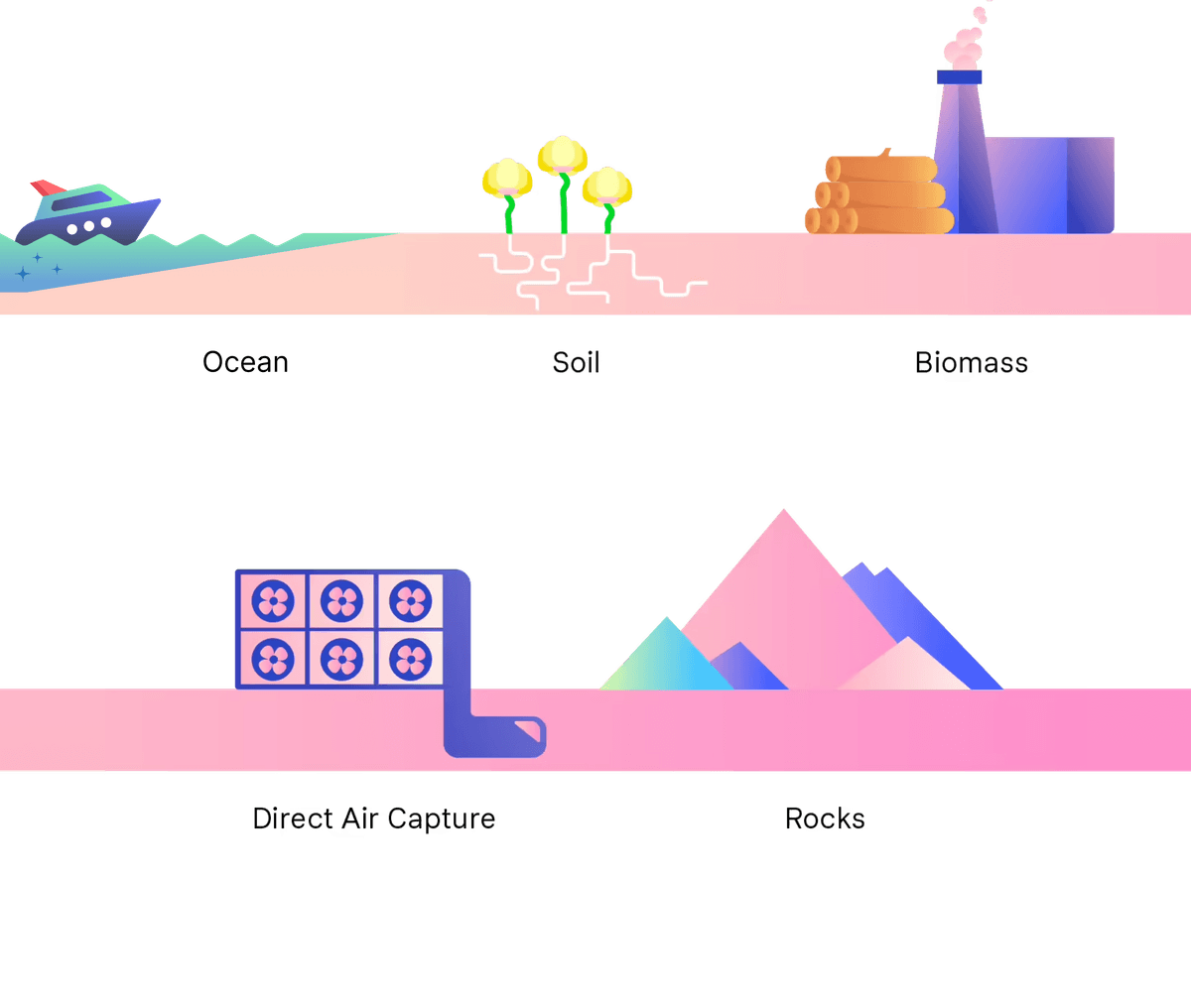
 Durable carbon removal (CDR)
 Decarbonisation
 Nature protection and restoration
Durable carbon removal (CDR)

France
Yama is a pioneering Direct Air Capture company with innovative technology that integrates a scalable, low-grade heat source with electrochemistry. Yama's solution addresses key limitations in existing approaches by enhancing energy efficiency, large scale carbon capture, combined with strategic partnerships, indicates a strong potential for scalability.

Decarbonisation

United States
Industrious Labs is an organisation dedicated to decarbonising heavy industry, with a specific focus on the aluminium, cement, steel and waste sectors. Their global cement campaign is centred around advocating for a shift from carbon-intensive Portland cement to existing, low-carbon technologies that can significantly reduce emissions in this sector. Whereas, their aluminium campaign aims to decarbonise the U.S. primary aluminium industry, leading to a substantial reduction in its CO₂ footprint. Industrious Labs prioritises four interconnected approaches to reducing emissions: advocacy campaigns, data and analysis, movement building, and strategic communications.

Nature protection and restoration

Tanzania
Plant With Purpose is a non-profit organisation that works with rural communities, implementing initiatives related to nature restoration and regenerative agricultural practices along watersheds, to improve crop yields, to bolster food sovereignty, and to improve water quality and access. They do it while empowering communities to find a path to self-sufficiency and resilience through so-called community Purpose Groups.
Taking meaningful climate action is essential for addressing the climate crisis. Strategies like internal carbon fees allow businesses to invest in high-quality projects that tackle critical challenges, such as carbon removal, nature restoration, and reforestation, while driving measurable and lasting impact. This approach fosters innovation, accountability, and real progress toward a net-zero future. Milkywire supports companies in achieving effective climate action through its proven Climate Transformation Fund. Aligned with leading frameworks like SBTi and guided by top scientific experts, the fund ensures every contribution supports impactful, science-backed projects. With rigorous quality assurance, transparent reporting, and a focus on maximizing outcomes, Milkywire offers a best-in-class solution for funding meaningful environmental change.


